Many adults notice that their romantic relationships seem to follow familiar emotional patterns. The partners may change, but the dynamics how closeness feels, how conflict unfolds, how secure or uncertain love seems often stay surprisingly consistent. Attachment theory offers a research-backed framework for understanding why.
Attachment styles describe patterns of emotional bonding that influence how people connect, communicate, and respond to intimacy in adult relationships. They are not labels meant to box people in, but lenses that help explain recurring relationship experiences.
This article explains what attachment styles are, where they come from, and how they shape adult romantic relationships without turning them into diagnoses or excuses.
What Are Attachment Styles?
Attachment styles are relatively stable patterns of emotional expectation and behavior that shape how people relate to close partners. They reflect how safe or unsafe connection feels, especially during moments of vulnerability, conflict, or uncertainty.
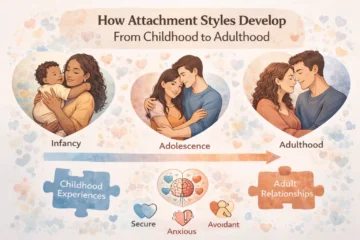
The concept originates from attachment theory, developed in the mid-20th century by John Bowlby and expanded through observational research by Mary Ainsworth. Their work focused on infant–caregiver bonds, but decades of research have since shown that attachment patterns often carry forward into adulthood particularly in romantic relationships.
Over time, repeated emotional experiences form internal “working models” of relationships. These models influence beliefs such as:
- Whether others are generally reliable or rejecting
- Whether one’s needs will be met or ignored
- How safe it feels to depend on someone emotionally
Importantly, attachment styles are patterns, not fixed traits. They describe tendencies that can shift with awareness, supportive relationships, and intentional growth.
Attachment Style vs. Personality
Attachment styles are often confused with personality traits, but they are not the same.
- Personality refers to broad, cross-situational tendencies (e.g., introversion, conscientiousness).
- Attachment style refers specifically to how someone responds to emotional closeness, separation, reassurance, and conflict in close relationships.
A person may appear confident and independent at work yet feel anxious or withdrawn in romantic situations. Attachment styles are context-sensitive, showing up most strongly in emotionally intimate bonds.
The Four Main Attachment Styles Overview
Researchers typically describe four primary attachment styles in adults. Most people identify with one dominant pattern, though traits can overlap.
1. Secure Attachment
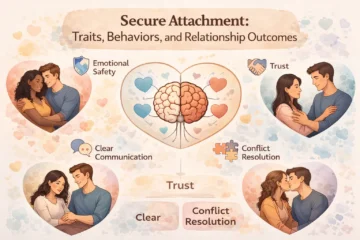
Secure attachment is characterized by emotional safety and flexibility.
Common traits include:
- Comfort with closeness and independence
- Ability to communicate needs openly
- Trust in a partner’s availability
- Resilience during conflict and stress
Securely attached adults tend to assume that relationships are generally safe and that problems can be addressed without threatening the bond.
2. Anxious Attachment
Anxious attachment centers on fear of abandonment and uncertainty about a partner’s commitment.
Common traits include:
- Heightened sensitivity to signs of distance
- Strong desire for reassurance
- Worry about being “too much” or not enough
- Tendency to overthink relationship cues
Anxious attachment is not about neediness by nature; it reflects a nervous system that has learned closeness can feel unpredictable.
3. Avoidant Attachment
Avoidant attachment emphasizes self-reliance and emotional distance.
Common traits include:
- Discomfort with emotional dependence
- Preference for independence over closeness
- Difficulty expressing vulnerability
- Pulling away during emotional intensity
Avoidantly attached adults often value autonomy highly and may downplay their need for connection, even when intimacy is desired at a deeper level.
4. Fearful-Avoidant (Disorganized) Attachment
Fearful-avoidant attachment combines elements of both anxiety and avoidance.
Common traits include:
- Desire for closeness paired with fear of it
- Push–pull dynamics in relationships
- Emotional intensity followed by withdrawal
- Confusion about trust and safety
This pattern is often associated with inconsistent or overwhelming early relational experiences, though it can also develop later through relational trauma.
How Attachment Styles Show Up in Adult Relationships
Attachment styles influence how people experience and respond to key relationship moments.
Communication Patterns
- Secure partners communicate directly and repair misunderstandings.
- Anxious partners may seek frequent reassurance or clarity.
- Avoidant partners may minimize emotional discussions or shut down.
Conflict Responses
- Secure attachment supports problem-solving and emotional regulation.
- Anxious attachment may escalate conflict due to fear of loss.
- Avoidant attachment often leads to withdrawal or stonewalling.
Emotional Regulation
Attachment styles shape how people manage distress:
- Secure adults self-soothe and seek support appropriately.
- Anxious adults may rely heavily on partner responses for regulation.
- Avoidant adults may suppress emotions to maintain control.
Intimacy and Vulnerability
Comfort with vulnerability varies significantly:
- Secure attachment allows intimacy without fear of engulfment.
- Anxious attachment may equate intimacy with safety.
- Avoidant attachment may associate intimacy with loss of autonomy.
Attachment Styles and Relationship Dynamics
Attachment patterns do not exist in isolation they interact.
1. Secure Secure Pairings
These relationships tend to feel stable, emotionally supportive, and resilient. Conflict exists, but repair happens efficiently.
2. Secure with Insecure Partners
Secure partners often provide emotional regulation and clarity, which can soften insecure patterns over time though this requires effort from both sides.
3. Anxious Avoidant Dynamics
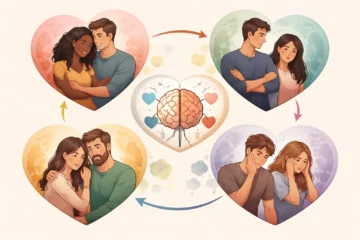
This pairing is especially common and emotionally intense. One partner seeks closeness while the other creates distance, reinforcing each other’s fears. The cycle can feel magnetic but exhausting without awareness and repair.
These dynamics are patterns, not destiny. Understanding them reduces confusion and blame.
Common Misconceptions About Attachment Styles
“Attachment styles never change”
Research shows attachment is relatively stable but not fixed. Change is possible through corrective experiences, therapy, and healthier relationships.
“My partner causes my attachment style”
Partners can trigger attachment responses, but they do not create them. Attachment styles reflect long-standing emotional learning.
“Avoidant means unemotional”
Avoidant attachment reflects emotional protection, not lack of feeling. Emotions are often present but managed internally.
“Anxious means needy”
Anxious attachment reflects a sensitivity to connection, not a character flaw.
How to Identify Your Attachment Style
Identifying an attachment style involves observing patterns rather than judging behaviors.
Helpful reflection questions include:
- How do I typically respond when I feel emotionally disconnected?
- Do I move toward closeness, away from it, or both?
- What patterns repeat across multiple relationships?
- How do I handle reassurance, conflict, and vulnerability?
Context matters. Stressful life events or emotionally unavailable partners can temporarily activate insecure behaviors even in generally secure individuals.
Why Understanding Attachment Styles Matters
Understanding attachment styles offers practical benefits:
- Increased self-awareness: recognizing patterns without shame
- Improved communication: naming needs more clearly
- Healthier partner choices: noticing compatibility beyond chemistry
- Reduced self-blame: reframing struggles as learned responses
Rather than asking, “What’s wrong with me or my partner?” attachment theory invites the question, “What does this pattern need in order to feel safer?”
Attachment Styles as Patterns, Not Life Sentences
Attachment styles describe tendencies shaped by experience—not permanent identities. While early relationships influence attachment, adult experiences also matter.
Supportive partners, emotionally corrective experiences, and therapeutic work can all move attachment toward greater security. Growth does not require becoming someone else; it involves creating enough emotional safety for different responses to emerge.
Conclusion
Attachment styles help explain why relationships feel the way they do—why closeness comforts some people and unsettles others, why conflict triggers fear or shutdown, and why certain dynamics repeat across time.
Understanding attachment styles does not excuse harmful behavior, nor does it assign blame. Instead, it provides a framework for insight, compassion, and intentional change.
As you learn more about specific attachment patterns and how they interact, attachment theory becomes less about labels and more about clarity—clarity that supports healthier, more secure adult relationships.