In early dating, physical affection often carries more emotional meaning than words. A kiss can signal attraction, comfort, excitement or uncertainty. Most of the time, kissing feels natural and intuitive. But occasionally, something shifts. The kiss feels different. Slightly distant. Slightly softer. Slightly rushed.
The change may be subtle, but the body often notices before the mind does.
In modern dating, where emotional clarity can lag behind physical intimacy, these small shifts can feel confusing. Does a different kiss mean something is wrong? Or is it simply part of a relationship’s natural evolution?
The answer is rarely simple. But research on attachment, nonverbal communication, and relationship dynamics suggests that subtle physical changes can reflect emotional context when viewed as patterns rather than isolated moments.
The Psychology Behind It Felt Different
The Brain’s Sensitivity to Relational Change
Humans are highly attuned to micro-changes in social behavior. Research in interpersonal neurobiology suggests that people subconsciously track variations in tone, facial expression, and touch. These subtle shifts activate emotional processing systems before conscious reasoning kicks in.
A 2019 review in Neuroscience & Biobehavioral Reviews highlighted that humans are wired for social pattern detection, particularly in close relationships where safety and attachment are involved. Small deviations from expected behavior can trigger heightened awareness.
When a kiss feels different, the sensation often reflects a mismatch between expectation and reality.
Neurochemistry and Emotional Context
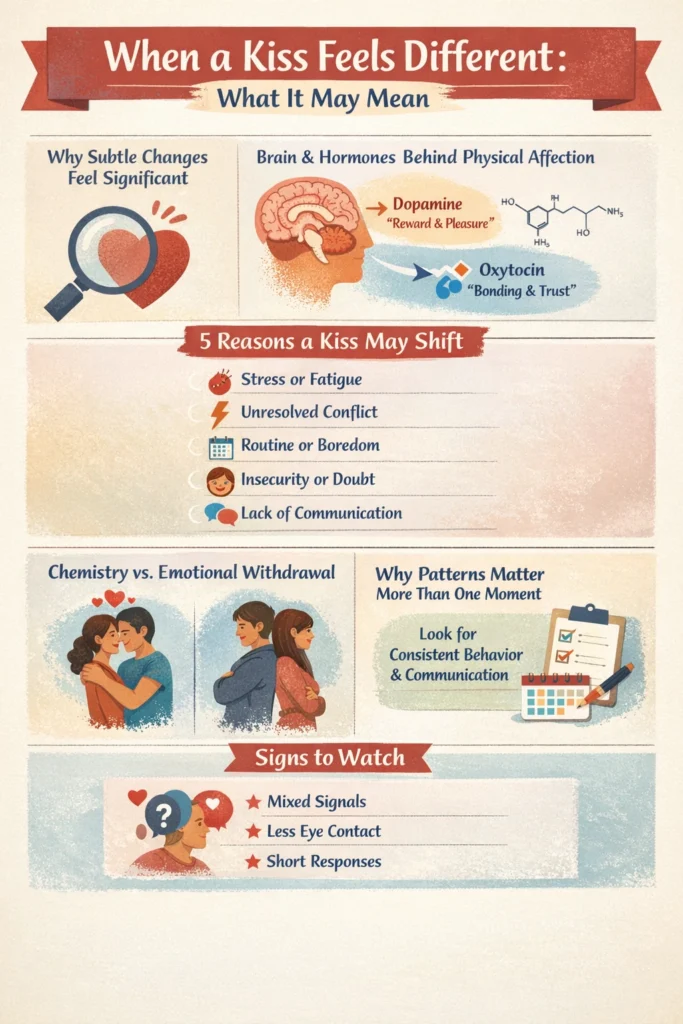
Kissing activates multiple neurochemical systems:
- Dopamine (reward and novelty)
- Oxytocin (bonding and trust)
- Cortisol (stress regulation)
A 2018 review in Current Opinion in Psychology found that oxytocin plays a significant role in reinforcing pair bonds and emotional closeness (Mikulincer & Shaver, 2018).
But context matters. If one partner is stressed, distracted, or emotionally conflicted, cortisol levels may interfere with bonding responses. The physical gesture may remain but the emotional tone can subtly shift.
In early dating, where emotional clarity is still forming, these shifts can feel amplified.
Also read: What the Way Someone Kisses You Can Reveal in Early Dating
Common Reasons a Kiss May Feel Different
A change in physical affection does not automatically signal a problem. Several explanations are possible.
1. Emotional Distance Emerging
Sometimes, subtle reduction in enthusiasm reflects shifting emotional investment. Signs may include:
- Shortened duration
- Reduced eye contact afterward
- Less reciprocal engagement
When these shifts align with decreased communication or planning effort, they may indicate growing emotional distance.
2. Growing Emotional Intimacy
Not all differences signal detachment. As relationships stabilize, intensity often softens. Early passion driven by novelty may evolve into slower, more grounded affection.
Research in Personal Relationships (2018) suggests that long-term bonding often transitions from dopamine-driven excitement to oxytocin-based stability. A kiss may feel different because it is less fueled by novelty and more rooted in comfort.
What feels “less intense” may actually reflect increased safety.
3. Unspoken Conflict or Tension
Even minor disagreements can influence physical closeness. A kiss following unresolved tension may feel hesitant or restrained.
Nonverbal cues often reveal emotional undercurrents that have not yet been verbalized. In early dating, partners may avoid direct discussion, allowing subtle changes in physical tone to carry the emotional message instead.
4. Changing Relationship Intentions
Dating intentions can evolve quietly. One partner may be reconsidering exclusivity, pacing, or long-term compatibility.
A 2021 review in Computers in Human Behavior noted that app-based dating environments can accelerate intimacy before emotional clarity is established. This dynamic can create mismatches between physical closeness and long-term intent.
If emotional enthusiasm shifts, physical affection may reflect that adjustment before words do.
5. External Stress Factors
Not every change is relational. Work stress, family pressure, sleep deprivation, or mental fatigue can alter physical responsiveness.
When someone feels overwhelmed, physical gestures may become automatic rather than engaged.
Chemistry Changes vs. Emotional Withdrawal
Early dating is characterized by novelty. Dopamine-driven excitement can heighten passion during initial encounters. Over time, intensity naturally stabilizes.
A decrease in urgency does not necessarily equal emotional withdrawal. It may signal transition—from infatuation to steadier connection.
The key difference lies in consistency:
- Does emotional warmth remain stable?
- Is communication still attentive?
- Are plans still intentional?
If affection softens but reliability strengthens, the relationship may be maturing rather than fading.
Signals Couples Often Overlook
Subtle patterns often matter more than dramatic shifts.
Timing and Initiation
- Who initiates physical affection?
- Has that pattern changed?
- Is enthusiasm mutual?
A noticeable change in initiation frequency can signal emotional recalibration.
After-Kiss Behavior
What happens immediately after can be revealing:
- Eye contact maintained or avoided
- Conversation warm or distant
- Physical proximity sustained or withdrawn
Emotional availability often shows up in these transitional moments.
Consistency Across Dates
One different kiss may reflect mood. Multiple shifts over several interactions may reflect emotional change.
Relationship research consistently shows that patterns—rather than isolated behaviors—predict relational stability.
The Role of Modern Dating Dynamics
Today’s dating culture introduces unique variables:
- Rapid emotional escalation
- Ambiguous exclusivity
- Blurred boundaries between casual and committed
Physical affection may progress quickly, sometimes outpacing emotional clarity. In such environments, subtle changes in kissing can feel like important data points.
However, without clear communication, physical signals can also be misinterpreted.
When Physical Affection and Communication Don’t Align
Misalignment can occur in several ways:
- Warm kisses paired with inconsistent texting
- Reduced affection but increasing emotional vulnerability
- Physical intensity without defined direction
Research in Journal of Social and Personal Relationships suggests that emotional consistency is a stronger predictor of relational satisfaction than physical intensity alone.
If words, actions, and affection align, differences may be contextual. If they diverge consistently, deeper emotional shifts may be underway.
Why Couples Ignore Subtle Signals
People often overlook changes because:
- Optimism bias encourages positive interpretation
- Fear of confrontation delays difficult conversations
- Ambiguity feels safer than clarity in early dating
- Changes are attributed to stress rather than relationship dynamics
In modern dating, where labels and expectations may remain undefined, subtle emotional data can be easier to ignore than address.
Patterns Over Interpretation
A kiss that feels different is information—not a verdict.
More useful questions include:
- Is this change consistent across multiple interactions?
- Is communication shifting as well?
- Does emotional warmth feel stable overall?
When physical affection, communication, and reliability align, small differences are often natural fluctuations.
When multiple elements shift together, the body’s perception of “something changed” may reflect real emotional recalibration.
Conclusion
When a kiss feels different, it often reflects a shift in emotional context. That shift may signal deepening intimacy, unspoken tension, changing intentions, or external stress.
A single moment rarely defines a relationship.
But the body’s awareness of subtle changes deserves attention—especially when those changes repeat.
In early dating, physical affection speaks. Consistency confirms. And patterns, over time, reveal far more than one altered kiss ever could.
Frequently Asked Questions:
1. Why can a kiss suddenly feel different in a relationship?
A kiss may feel different due to subtle emotional shifts, stress, evolving attraction, or changing relationship dynamics. Humans are highly sensitive to micro-changes in tone, pace, and physical responsiveness, which can alter perception even if nothing explicit has been discussed.
2. Does a different kiss always mean someone is losing interest?
Not necessarily. Changes in kissing can reflect comfort, reduced novelty, mood fluctuations, or external stress. Loss of interest is more likely indicated by consistent changes across communication, effort, and emotional availability not a single moment.
3. Can growing emotional intimacy change the way a kiss feels?
Yes. As relationships stabilize, intensity driven by novelty may shift toward slower, more grounded affection. What feels “different” may actually reflect increased safety and familiarity rather than detachment.
4. How can you tell the difference between stress and emotional distance?
Stress-related changes are often temporary and may be accompanied by openness about external pressures. Emotional distance tends to show up consistently across affection, communication, and planning effort.
5. Should one changed kiss be considered a red flag?
No. Isolated moments rarely provide enough information to draw conclusions. Patterns over time—especially when aligned with other behavioral shifts offer more reliable insight.
6. Why do physical shifts sometimes feel more noticeable than verbal changes?
Nonverbal communication is processed quickly and subconsciously. Subtle changes in touch, pacing, or attentiveness can register emotionally before conscious reasoning catches up.
7. Can modern dating dynamics make physical signals more confusing?
Yes. Rapid intimacy, unclear exclusivity, and digital communication can blur emotional clarity. In such contexts, physical gestures may feel amplified or harder to interpret accurately.
8. What role does attachment style play in physical affection?
Attachment tendencies can influence comfort with closeness. Secure individuals often show steady affection, while anxious or avoidant patterns may affect intensity or distance in physical expression.
9. Is it normal for kissing chemistry to fluctuate over time?
Yes. Attraction and emotional intensity naturally evolve as novelty decreases and familiarity increases. Fluctuations are common and do not automatically indicate relational decline.
10. What matters most when interpreting changes in physical affection?
Consistency across behaviors. If affection, communication, and reliability remain aligned, minor shifts are often contextual. When multiple areas change together, the shift may reflect a broader emotional adjustment.