Silence in romantic relationships is rarely neutral. Even when no words are spoken, communication continues through absence, tone shifts, physical distance, and changes in responsiveness. A pause after conflict can feel calming to one partner and threatening to another. A delayed response to a message may signal simple distraction or emotional withdrawal.
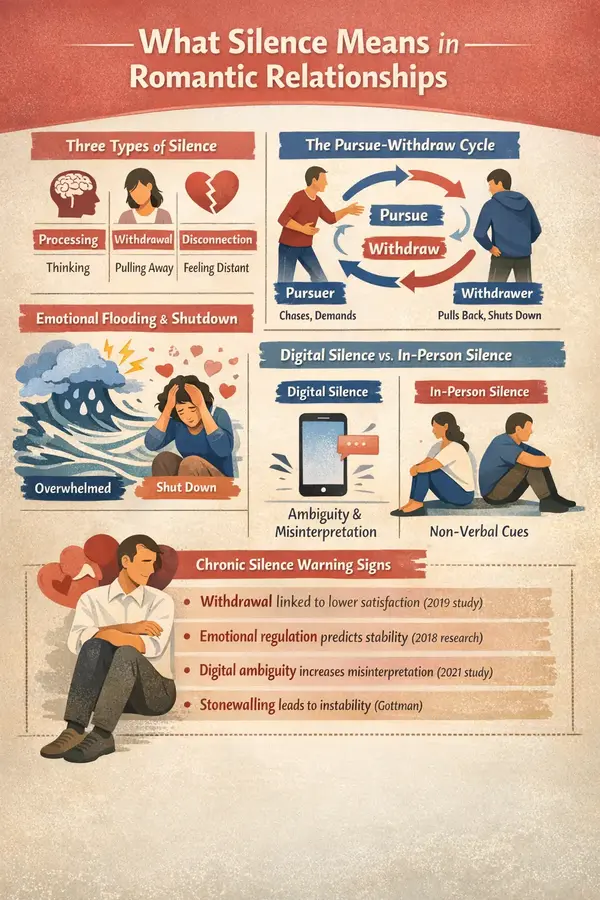
Psychologically, silence is not just the absence of speech. It is a communicative behavior shaped by emotional regulation, attachment patterns, conflict style, and contextual stress. In close relationships, silence is often interpreted in one of three ways:
- Withdrawal
- Emotional processing
- Disconnection
Understanding the differences between these patterns is essential because repeated silence can either protect relational stability or gradually erode it.
The Psychology of Silence in Close Relationships
Silence can serve multiple psychological functions:
1. Silence as Emotional Regulation
When emotions intensify, individuals may pause communication to prevent escalation. Research on emotional regulation suggests that temporary disengagement during high physiological arousal can reduce conflict intensity (Bloch, Haase, & Levenson, 2018, Psychological Science,
In this context, silence functions as a regulatory tool rather than avoidance.
2. Silence as Avoidance
Communication avoidance occurs when individuals disengage to reduce discomfort rather than resolve underlying tension. A 2021 review in Current Directions in Psychological Science highlights avoidance and defensiveness as predictors of escalating relational distress.
Avoidant silence tends to repeat across similar conflicts.
3. Silence as Emotional Overload
When individuals experience emotional flooding rapid heart rate, heightened stress hormones, cognitive overload they may temporarily shut down. This shutdown can resemble indifference but is often a stress response.
Context determines which psychological function silence serves.
Also read: 8 Conversation Patterns That Predict Relationship Longevity
Silence as Emotional Processing
Not all silence signals conflict.
Some individuals require time to reflect before articulating emotions. Personality traits such as introversion and high cognitive reflection are associated with delayed but more structured emotional expression.
Temporary processing silence often includes:
- Clear resumption of conversation
- Non-hostile body language
- Continued engagement outside the conflict
When silence is time-bound and followed by constructive dialogue, it can support clarity and reduce impulsive reactions.
Research on constructive conflict patterns suggests that regulated pauses may prevent escalation and improve long-term satisfaction
In these cases, silence reflects regulation not relational threat.
Silence as Conflict Withdrawal
Withdrawal during disagreement differs from processing.
Conflict withdrawal involves emotional disengagement during tension, often accompanied by reduced eye contact, minimal verbal response, or physical distancing. It commonly appears in the well-documented pursue–withdraw dynamic:
- One partner seeks discussion.
- The other retreats into silence.
- The pursuer escalates intensity.
- The withdrawer retreats further.
Withdrawal often functions as self-protection but can be interpreted as rejection. Over repeated cycles, this pattern erodes emotional safety.
Silence as Emotional Disconnection
Disconnection represents a more serious relational shift.
Unlike temporary withdrawal or processing, disconnection involves reduced emotional investment, decreased responsiveness, and diminished effort to repair misunderstandings.
Indicators may include:
- Persistent indifference
- Minimal curiosity about partner experiences
- Lack of follow-up after conflict
- Emotional flatness rather than overwhelm
Disconnection silence tends to feel emotionally empty rather than tense.
Know more about this article on The Psychology of Emotional Expression in Romantic Partnerships
The Role of Attachment Styles in Silent Patterns
Attachment theory provides insight into how silence is both expressed and interpreted.
Avoidant Attachment
Avoidantly attached individuals often minimize emotional expression and may rely on silence to maintain autonomy. Silence may serve as a distancing mechanism rather than reflection.
Anxious Attachment
Anxiously attached individuals are particularly sensitive to partner silence. Research shows they may interpret neutral pauses as signs of abandonment or rejection.
Secure Attachment
Securely attached partners are more likely to use silence as regulated pause rather than defensive withdrawal. They also tend to resume dialogue with reassurance.
Attachment differences can create amplification cycles, where one partner’s silence intensifies the other’s anxiety.
Digital Silence: Ghosting, Delayed Responses, and Ambiguity
Modern relationships add a new dimension: digital silence.
Text-based communication removes vocal tone, facial cues, and immediate clarification. A 2021 study in Computers in Human Behavior found that delayed responses and ambiguous digital cues increase uncertainty and negative interpretation bias
Digital silence can take several forms:
- Unanswered messages
- Delayed replies without context
- Sudden disappearance (“ghosting”)
Without contextual information, partners may fill gaps with assumptions, increasing emotional volatility.
Physiological and Emotional Regulation Factors
Silence is often tied to physiological processes.
During emotional flooding:
- Heart rate accelerates
- Cortisol levels rise
- Cognitive flexibility decreases
Under these conditions, individuals may shut down rather than engage productively.
Research suggests that couples who allow space for physiological regulation before re-engaging show greater long-term stability (Bloch et al., 2018).
Distinguishing between shutdown due to overwhelm and disengagement due to indifference requires observing patterns over time.
Cultural and Social Influences on Silence
Cultural norms strongly influence attitudes toward silence.
In some cultures, emotional restraint is associated with maturity and respect. In others, emotional expressiveness is linked to authenticity and intimacy.
Family modeling also shapes silence patterns:
- Households that avoided conflict may normalize quiet withdrawal.
- Households that emphasized verbal processing may interpret silence as problematic.
Gender socialization can further complicate interpretation. Research suggests men may be more frequently socialized toward emotional restraint, while women may be encouraged toward verbal processing
These norms influence how silence is both enacted and perceived.
When Silence Becomes a Pattern
Silence becomes concerning when it shifts from situational to chronic.
Indicators of problematic patterns include:
- Increasing frequency
- Longer duration
- Absence of repair attempts
- Escalation into stonewalling
Chronic stonewalling persistent refusal to engage has been associated with relational dissatisfaction and eventual instability in longitudinal studies summarized by The Gottman Institute
Patterns matter more than isolated incidents. Occasional silence during stress differs from habitual emotional unavailability.
Common Misinterpretations About Silence
Myth 1: Silence Always Means Loss of Interest
Silence may signal emotional processing or regulation rather than disengagement.
Myth 2: Immediate Talking Is Always Healthier
Immediate discussion during emotional flooding can escalate rather than resolve conflict.
Myth 3: Quiet Partners Are Emotionally Unavailable
Some individuals experience emotions intensely but require time before verbal expression.
Interpretation depends on context, attachment style, frequency, and post-silence behavior.
Conclusion
Silence in romantic relationships carries meaning but that meaning varies.
It can represent:
- Emotional regulation
- Reflective processing
- Conflict withdrawal
- Gradual disconnection
Distinguishing among these requires attention to patterns, timing, emotional tone, and responsiveness after the silence ends.
Research consistently suggests that silence becomes harmful not when it occurs, but when it becomes chronic, defensive, and unaccompanied by repair or re-engagement. When used as a temporary regulatory strategy, silence may protect relationships. When used as a persistent barrier to connection, it can quietly erode emotional safety.
In close partnerships, silence is not empty. It is a signal one that gains clarity only when viewed in relational context.
Frequently Asked Questions:
1. Is silence in a relationship always a bad sign?
No. Silence can serve different psychological functions. It may reflect emotional processing, stress regulation, or a temporary pause during conflict. Patterns over time—not isolated moments—determine whether silence is constructive or concerning.
2. What is the difference between emotional processing and withdrawal?
Emotional processing involves taking time to reflect before responding and is usually followed by re-engagement. Withdrawal, especially during conflict, often involves avoiding discussion or disengaging without clear return to the issue.
3. How can you tell if silence means emotional disconnection?
Emotional disconnection tends to include reduced responsiveness, lack of curiosity about a partner’s experiences, minimal effort to repair misunderstandings, and a general decline in emotional engagement over time.
4. Why does silence during conflict feel threatening to some people?
Attachment patterns and past experiences influence how silence is interpreted. Individuals with anxious attachment tendencies may perceive silence as rejection, even when it reflects temporary regulation or processing.
5. Is taking space during an argument unhealthy?
Not necessarily. Short breaks during high emotional intensity can reduce escalation. Research suggests that regulated pauses can support more constructive conversations once partners re-engage.
6. What is stonewalling, and how is it different from silence?
Stonewalling is a chronic pattern of refusing to engage, often during conflict, and typically includes emotional shutdown or indifference. It differs from temporary silence because it lacks clear re-engagement or repair attempts.
7. How does digital silence affect relationships?
Digital silence such as delayed responses or unanswered messages can increase ambiguity because tone and context are missing. This ambiguity may lead to negative interpretations, particularly in early stage or long-distance relationships.
8. Can personality differences explain silence patterns?
Yes. Some individuals require more internal processing time before expressing emotions, while others prefer immediate verbal discussion. Differences in temperament can influence how silence is used and interpreted.
9. When does silence become a recurring problem?
Silence becomes concerning when it is frequent, prolonged, avoids important topics, or consistently follows conflict without resolution. Chronic patterns may gradually reduce emotional safety and trust.
10. Does silence always indicate loss of interest?
No. Silence may signal emotional overwhelm, stress, or reflective processing. Interpreting silence accurately requires observing broader patterns of responsiveness and engagement over time.